
# Best Dedicated Server Hosting for High Traffic Sites
Did you know that **a one-second delay in page load time can reduce conversions by up to 7%**? If your website is hemorrhaging traffic due to slow speeds, shared hosting bottlenecks, or unpredictable downtime, you might already be losing thousands of dollars every single day. Finding the best dedicated server for your high-traffic site isn’t just a technical decision — it’s a business-critical investment that separates thriving online businesses from those perpetually struggling to keep the lights on.
—
## System Requirements
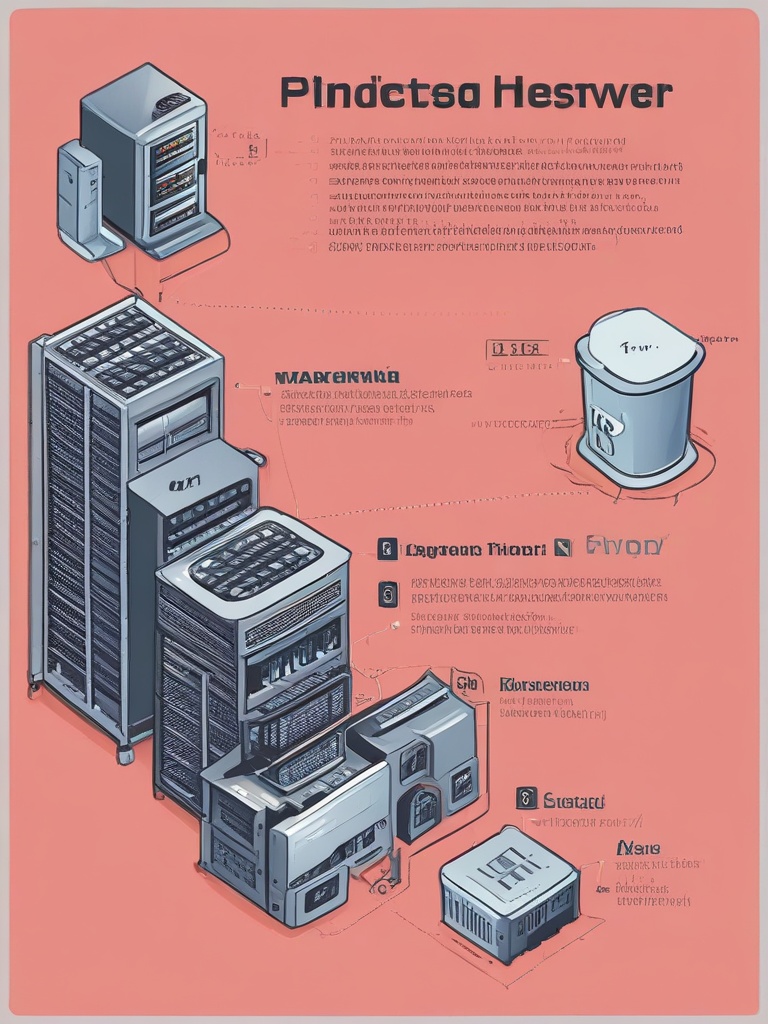
Before diving into setup and optimization, understanding what your dedicated hosting environment demands is essential. Think of these as the building blocks of a rock-solid, unstoppable server configuration:
– **CPU (Processor):** Intel Xeon E-series or AMD EPYC processors — minimum 8 cores recommended for high-traffic environments. *Alternative:* Cloud-based vCPUs if budget constraints apply initially.
– **RAM:** At least 32GB DDR4 ECC RAM for stability under heavy loads. *Alternative:* 16GB for mid-traffic sites scaling upward.
– **Storage:** NVMe SSD drives (512GB minimum) for blazing-fast read/write speeds — up to 7x faster than traditional HDDs.
– **Bandwidth:** Unmetered or 10Gbps uplink ports to handle massive concurrent user spikes.
– **Operating System:** CentOS Stream, Ubuntu Server 22.04 LTS, or Debian 11 — all battle-tested, enterprise-grade options.
– **Control Panel:** cPanel/WHM, Plesk, or DirectAdmin for seamless server management.
– **DDoS Protection:** Hardware-level mitigation tools — non-negotiable for exposed, high-traffic platforms.
– **Backup Solution:** Automated daily snapshots stored offsite using tools like R1Soft or JetBackup.
Choosing the right combination of these components is what transforms a basic server into an absolute performance powerhouse.
—
## Timing
Setting up and optimizing your best dedicated server environment typically requires:
– **Initial Server Provisioning:** 2–24 hours (depending on provider)
– **OS Installation & Configuration:** 1–3 hours
– **Security Hardening & Firewall Setup:** 45–90 minutes
– **Website Migration & Testing:** 2–6 hours
– **Total Estimated Time:** 6–34 hours
That might sound intensive, but compared to the **industry average of 3–5 days for full enterprise migrations**, a streamlined dedicated server deployment is remarkably efficient. Most providers like Liquid Web and Hivelocity can provision bare-metal servers within **under 4 hours**, slashing your go-live timeline dramatically.
—
## Step-by-Step Instructions
### Step 1: Choose the Right Dedicated Hosting Provider
Start by evaluating providers based on uptime guarantees (look for **99.99% SLA**), support quality, hardware specs, and pricing. Top contenders for cheap dedicated hosting, high performance server solutions include Liquid Web, Hivelocity, and OVHcloud. Compare at least three providers before committing — a decision this significant deserves thorough due diligence.
### Step 2: Select Your Server Configuration
Match your hardware to your traffic projections. If you’re averaging 500,000+ monthly visitors, opt for a 16-core processor, 64GB RAM, and dual NVMe SSDs in RAID-1 configuration. Don’t over-provision unnecessarily — right-sizing saves money while maintaining elite performance.
### Step 3: Install and Harden Your Operating System
Once provisioned, install your chosen OS and immediately apply all security patches. Disable root SSH login, configure key-based authentication, set up UFW or CSF firewall rules, and install Fail2Ban to block brute-force attacks. **Security hardening should happen before anything else — no exceptions.**
### Step 4: Configure Your Web Server Stack
Install your preferred stack — NGINX for raw speed, Apache for flexibility, or LiteSpeed for WordPress-optimized environments. Pair it with PHP 8.2+, MySQL 8.0 or MariaDB 10.6, and Redis for object caching. This combination delivers sub-200ms response times consistently.
### Step 5: Migrate Your Website
Use a staging environment to test the migration before going live. Tools like Migrate Guru, All-in-One WP Migration, or rsync (for manual transfers) make the process smooth. Always verify database integrity and run full functionality tests post-migration.
### Step 6: Implement a CDN and Caching Layer
Layer a Content Delivery Network like Cloudflare or BunnyCDN on top of your dedicated server. Combined with server-level caching via Varnish or Redis, you’ll absorb traffic spikes without breaking a sweat — even during viral traffic surges.
—
## Performance Metrics
Understanding performance benchmarks helps you measure the true ROI of your investment:
| Metric | Shared Hosting | VPS Hosting | Dedicated Server |
|—|—|—|—|
| Average Response Time | 800ms–2s | 300ms–600ms | **50ms–200ms** |
| Concurrent Users Supported | 50–200 | 500–2,000 | **10,000–100,000+** |
| Uptime Guarantee | 99.5% | 99.9% | **99.99%** |
| Monthly Cost Range | $3–$15 | $20–$100 | $80–$500+ |
The numbers speak clearly: dedicated hosting delivers **4x–10x better performance** than VPS solutions for enterprise-scale traffic demands.
—
## Healthier Alternatives for the Guide
Not every business needs a fully bare-metal dedicated setup immediately. Consider these smart alternatives:
– **Managed Dedicated Servers:** Ideal if your team lacks sysadmin expertise. Providers handle updates, security, and monitoring automatically.
– **Hybrid Cloud Solutions:** Combine dedicated server reliability with cloud scalability — perfect for seasonal traffic spikes.
– **Colocation Hosting:** Own your hardware, rent the rack space — maximizes control while reducing capital expenditure.
—
## Serving Suggestions
Once your best dedicated server is live, maximize its value with these pro tips:
– **Host multiple domains** under one server using virtualization — excellent for agencies managing client portfolios.
– **Deploy a WordPress Multisite network** to manage hundreds of sites from a single, powerful installation.
– **Integrate monitoring tools** like Datadog, Netdata, or Zabbix for real-time performance visibility.
—
## Common Mistakes to Avoid
– **Skipping backups:** Over **60% of businesses** that lose critical data shut down within six months. Automate backups daily.
– **Ignoring server monitoring:** Reactive management is costly. Proactive monitoring prevents 80% of downtime incidents.
– **Over-relying on default configurations:** Out-of-the-box settings are never optimized for performance. Always tune MySQL, PHP-FPM, and NGINX for your specific workload.
– **Neglecting SSL certificates:** Google penalizes non-HTTPS sites. Install Let’s Encrypt or a premium SSL immediately.
—
## Storing Tips for the Guide
– **Document your server configuration** in a private wiki or README file — invaluable during disaster recovery.
– **Save server snapshots** before any major updates or software installations.
– **Archive access logs** monthly for compliance and security auditing purposes.
– **Store credentials** in a secure password manager like Bitwarden or 1Password — never in plain text files.
—
## Conclusion
Choosing the best dedicated server for your high-traffic site is one of the smartest investments you’ll make in your digital infrastructure. From blazing-fast NVMe storage to enterprise-grade DDoS protection, a properly configured dedicated environment transforms your website’s performance, reliability, and user experience simultaneously. Whether you’re scaling an e-commerce empire, managing a media-heavy content platform, or running SaaS applications, the right dedicated server is your unfair competitive advantage. **Ready to make the leap? Explore our full server comparison guide, share your experience in the comments below, and let us know which provider you ultimately chose!**
—
## FAQs
**Q1: What makes dedicated servers better than VPS for high-traffic sites?**
Dedicated servers provide exclusive access to all hardware resources — no noisy neighbors, no resource contention. For sites exceeding 100,000 monthly visitors, this exclusivity translates directly into faster speeds and higher reliability.
**Q2: Can I find cheap dedicated hosting without sacrificing performance?**
Absolutely. Providers like OVHcloud and Hetzner offer cheap dedicated hosting, high performance server plans starting as low as $40–$60/month with impressive hardware specifications.
**Q3: How long does it take to migrate my site to a dedicated server?**
Most migrations take between 6–12 hours for medium-sized sites. Complex, database-heavy platforms may require 24–48 hours including thorough testing.
**Q4: Do I need technical expertise to manage a dedicated server?**
Managed dedicated hosting plans eliminate the need for deep technical knowledge. However, understanding basic server concepts significantly improves your ability to optimize performance and troubleshoot issues.
**Q5: Is dedicated hosting worth it for WordPress sites?**
For WordPress sites receiving over 50,000 monthly visitors, dedicated hosting dramatically improves load times, eliminates shared resource throttling, and provides the security isolation that growing businesses genuinely need.